Series — marine drive
48V deep-cycle marine batteries
CELLFORGE READOUT — MARINE DRIVE TABLE · 50 / 105 / 150AH
The full published table for the marine drive series: three capacities sharing one 48V frame, sized for electric propulsion and onboard power.
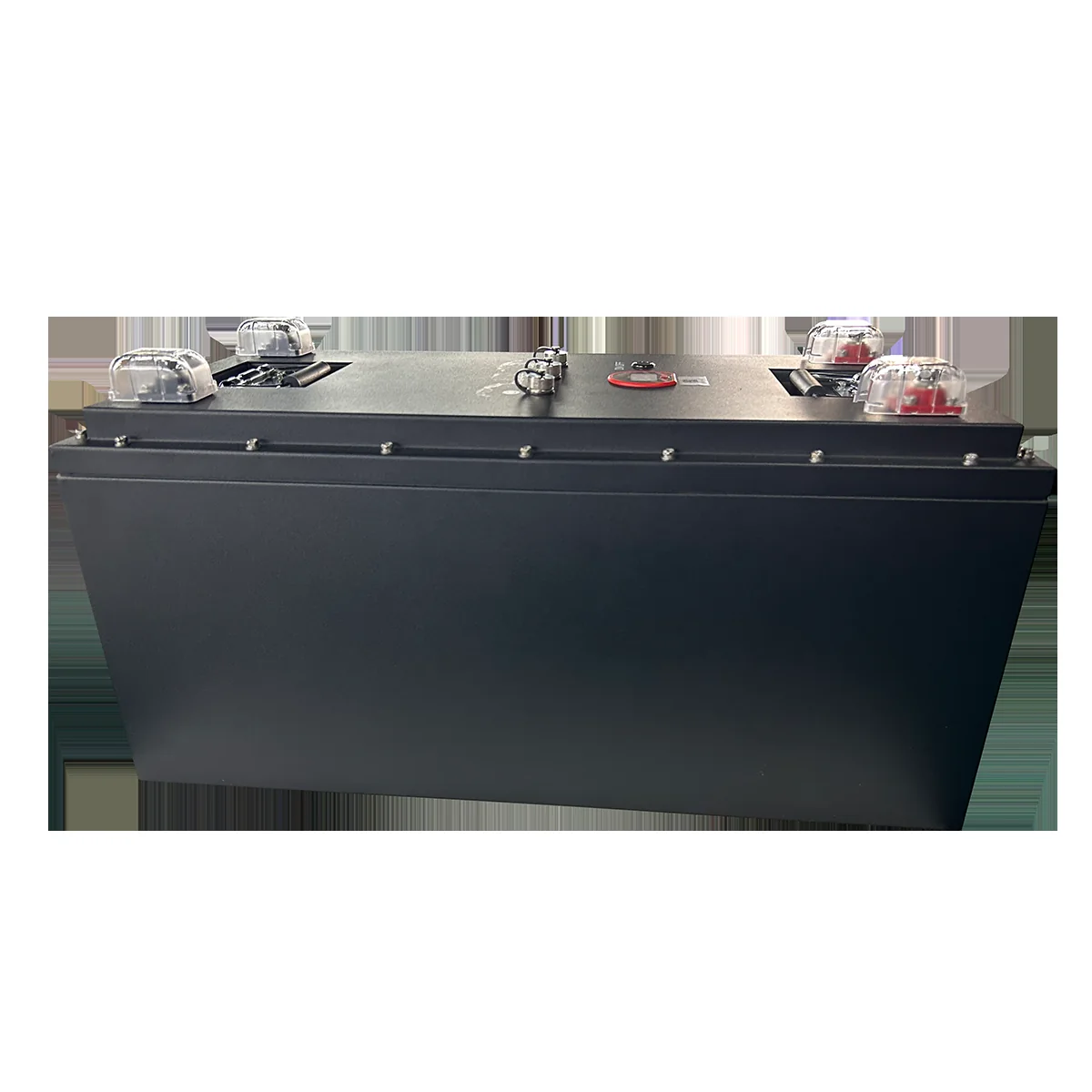
Three capacities on one 48V table
The marine drive table as published by the company; each model page repeats its own row:
| Variant | Energy | Std charge | Std discharge | Impedance |
|---|---|---|---|---|
| 48V 50Ah | 2400Wh | 25A | 100A (2C) | ≤80mΩ |
| 48V 105Ah | 5040Wh | 50A | 210A (2C) | ≤80mΩ |
| 48V 150Ah | 7200Wh | 75A | 300A | ≤80mΩ |
Reading the discharge column
The 48V deep-cycle marine series lists standard discharge currents of 100A, 210A and 300A, matched to the 50Ah, 105Ah and 150Ah variants. Read plainly, that is the current the pack is described as delivering in its standard discharge condition. For propulsion, current draw is not steady: a motor can pull a short burst far above its cruising draw when you push the throttle or come alongside in wind and current. That is why the 2C figure matters: the standard discharge ratings for the 50Ah and 105Ah variants carry a 2C notation. Read the figure as the standard discharge the supplier publishes for the model — the rate to hold against your motor's sustained draw, including the higher draw of manoeuvring. The company states the packs are about 40% lighter than lead-acid. Ask the supplier for the discharge test report for the exact model before you order.
Sizing for propulsion vs house power
Choose by duty, not by headline capacity. A propulsion pack is worked in bursts: high current on throttle, long low-current stretches while cruising, and repeated shallow-to-moderate cycles through the day. Its owner cares about burst current, usable energy for the passage and how the pack behaves under repeated partial cycling. A house pack is worked differently: refrigeration, electronics and lighting run for long hours at modest current, and the cycle is deep and slow. Its owner cares about steady available energy across a night or an anchorage and clean recharge behaviour. That difference changes which variant fits. The 50Ah model suits smaller, lighter drive loads and shorter runs; the 105Ah model sits in the middle for mixed propulsion and house duty; the 150Ah model gives the largest published energy figure in the frame for longer runs and heavier onboard loads. The three model pages show the full published table for each variant, so compare them against your own load profile before deciding.
Before you order
What variants are in the 48V deep-cycle marine series?
The company's marine detail table lists three: 50Ah, 105Ah and 150Ah, all in a 48V nominal frame. The corresponding energy figures are 2400Wh, 5040Wh and 7200Wh.
What is the charge voltage for these packs?
The table lists 54.75V as the charge voltage, with standard charge currents of 25A, 50A and 75A across the range. Match the charge current to the model you select.
What discharge current is published for each model?
Standard discharge is listed as 100A for the 50Ah model, 210A for the 105Ah model and 300A for the 150Ah model, with 2C noted. Ask the supplier for the discharge test report for the exact model before you order.
Are the packs lighter than lead-acid?
The company states the packs are about 40% lighter than lead-acid. Ask for the weight documentation for the exact model before you order.
Pick a variant for your vessel
Send the inquiry form with your application and the model you are considering, and we will come back with the published details for that variant. Include your duty cycle and onboard loads so the reply matches how you will actually use the pack.
Go to the inquiry form