Blog
A buying and care guide for marine lithium batteries
CELLFORGE BLOG — MARINE · BUYING AND CARE, ONE SEASON AT A TIME
A marine battery lives a harder life than almost any other pack on this site: vibration, spray, long idle winters and a motor that asks for everything at once. This guide covers buying and looking after one.
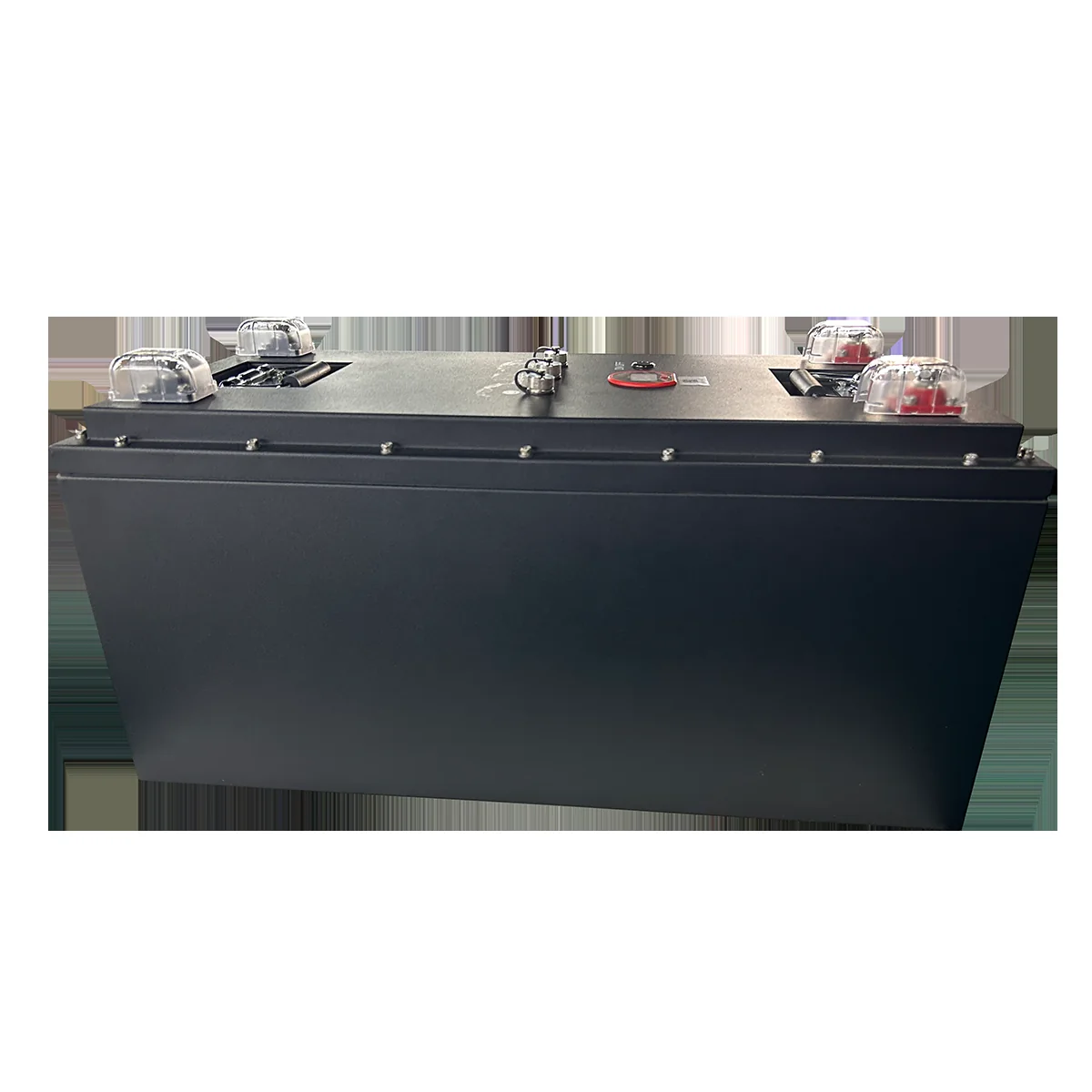
Buying starts with the duty, not the battery
Before you compare packs, write down what the battery will actually do on your vessel. A marine pack might run a bow thruster and windlass, carry a house load of electronics through an night at anchor, feed an electric propulsion motor, or do some mix of all three. Those are different jobs, and they put different demands on a pack.
Propulsion loads are the heavy lifters: they ask for a lot of current for as long as the helm is pushed forward. House loads are smaller but constant, and they run for as long as the boat is occupied. A pack sized for house duty and then asked to drive a motor is being used outside the job it was chosen for. The company lists yachts, fishing boats, sailboats, ferries, cargo ships and offshore vessels in the marine range, so the first question to settle is which of those duties matches your own boat.
Once the duty is clear, go to the series page and read the discharge column of the table first. That column tells you what the pack can deliver at a given current, which is the number that decides whether a propulsion or combined load is realistic. Do not start with capacity alone. A large pack with a modest discharge capability will still struggle with a motor that asks for everything at once. The series and model pages carry that table, so open those pages alongside your duty list and match the two.
If you are unsure which column applies to your case, ask before you order. Describe the loads, how long they run and how you use the boat. The supplier can point you to the model whose discharge figures fit the job. That conversation is cheaper than discovering the mismatch at the dock.
Water, spray and the waterproofing question
Spray reaches a pack differently on every vessel. On a sailboat it comes over the rail and into lockers when the boat heels. On a fishing boat it arrives with the washdown hose and the working deck. On a yacht it may be a wet locker or a splash through a hatch. Ferries, cargo ships and offshore vessels put packs in machinery spaces where hoses, condensation and sea air are part of daily life. None of these are the same problem, and the placement of the pack decides how much of the problem it faces.
The company lists a waterproofing customisation option for its packs, described as an option for buyers who need extra protection. Treat it as a configuration choice, not a guarantee. Ask what the option covers on the exact model you are considering, and how it interacts with the mounting and cable entry you plan to use. The supplier describes the option in its own materials; read those alongside this guide and put your questions in writing before you order.
Installation placement is the first line of protection, and it costs nothing. Keep packs out of the bilge sump, away from hose-down paths and off the deck where green water can reach them. Give them a dry, ventilated space with room for cables to enter without chafing. A pack in a good position with the standard enclosure often has an easier life than a protected pack sitting in a wet corner.
Finally, confirm the suitability of the installation for your vessel and any classification or approval your application requires before ordering. That is your call as the buyer, and it is best made early, while the configuration can still change.
Terminals, cables and vibration
Marine vibration is relentless and it works on the weakest point first, which is usually a connection. A terminal that was tight at the dock can work loose over a season of passages, and a loose terminal is both a reliability problem and a heat problem. The care routine that prevents it is simple and takes minutes.
Start with the terminal covers. Where covers are fitted, keep them in place whenever the pack is installed, and replace any that crack or go missing. Covers keep stray tools and metal objects from bridging the terminals, and they keep spray and salt film off the contact surfaces. When you do work on the terminals, take the covers off, do the job, and put them back before you walk away.
Give every cable strain relief. Cables should be supported so their weight and the boat's motion are carried by clips or ties, not by the terminal. Leave a gentle service loop so the cable can move without pulling on the post. Check the cable jacket where it enters the terminal for chafe, and route cables away from sharp edges and hot surfaces.
After a hard passage, or at the start of every season, check terminal tightness and inspect the cable ends for corrosion or discolouration. A connection that has been running warm will show it. If you find a loose terminal, re-tighten it to the figure in the documentation supplied with your pack, not to feel — if that figure is not in the document set, ask for it in the inquiry before the season starts.
None of this replaces the management system inside the pack, which watches the cells while you sail. It supplements it. Good terminal and cable care keeps the pack's own protection from being tested unnecessarily.
Charging at the dock and laying up for winter
At the dock, charge to the routine the supplier sets out for your model. Use a charger set for the pack's chemistry, and follow the charging instructions the supplier provides for your model rather than improvising a routine of your own. If those instructions do not cover your pattern of use — short trips, long idle weeks, a charger left connected — ask for guidance for that pattern in the inquiry.
Watch the pack while it charges, at least at first. Feel the cables and terminals after a charge and note anything warm. If the management system shuts the pack down, treat that as information, not an inconvenience: note what the pack was doing and ask the supplier before you push it back into service.
For winter, the job is to leave the pack in a state it can sit in. Disconnect loads you do not need, keep the pack in its dry space, and follow the storage guidance the supplier gives for the model. The company lists a hibernate or low-power behaviour in the management system, which reduces what the pack draws while it sits idle. The supplier describes this as a listed feature, so ask how it is triggered on your model and whether you should use it for your lay-up period.
Before the season starts, charge the pack, check the terminals and any covers fitted, and confirm the management system wakes as expected. If anything behaves differently from last year, ask the supplier rather than guessing.
And before you order any of this, confirm the suitability of the pack and any classification or approval your application requires. That is yours to check, and early is the right time.
The approval question, asked early
The single most useful thing you can do before ordering a marine pack is to settle the approval question. Confirm the suitability of the pack for your vessel and application, and confirm any classification or approval your application requires. That confirmation is the buyer's responsibility, and it is best done before the order, not after the pack arrives.
Why early? Because the answer can change the configuration. The waterproofing option, the terminal arrangement, the cable entry and the model you choose may all shift once you know what your application, insurer or class society will ask for. Asking after the order means reworking a pack that was already built to a different brief. Asking before means the supplier can quote and configure to the right specification from the start.
Put the question in writing. State the vessel type, the duty the pack will serve and the documents your market requires. Ask for the test reports and certificate documents your market requires for the exact model before you order. Read them against your own requirements rather than relying on a summary.
Then look at the marine range. The company lists yachts, fishing boats, sailboats, ferries, cargo ships and offshore vessels, and the series and model pages carry the tables you need for the duty comparison. Match the discharge column to your loads as described earlier, and match the paperwork to your approval question.
When both line up, you are ready to order with confidence. When either is unclear, ask. The supplier would rather answer a question before the build than solve a mismatch after it.
Talk to the sales team
Send the inquiry form with your application and the model details you are considering, and the supplier can confirm the configuration and the documents your market requires before you order.
Go to the inquiry form