Guide — lifespan
How long do LiFePO4 batteries last?
CELLFORGE READOUT — LIFESPAN · READ THE CONDITIONS, NOT THE SLOGAN
A cycle-life claim is only as good as the conditions behind it. This guide teaches buyers how to read one: what a cycle counts, which conditions hide behind the number, and which documents to request.
What a cycle actually counts
A cycle is not a count of every plug-in. It is an equivalent full charge-discharge: the total energy taken out and put back, added up until it matches one full pack. Two partial cycles can add up to one full cycle. This is why a pack that is topped up often can show the same cycle count as one that is run flat and recharged.
That equivalence matters when you compare packs. Two packs with the same headline cycle claim can age very differently in service because the claim counts equivalent full cycles, not the conditions they were delivered under. A pack that is routinely discharged deeply and recharged quickly is doing harder work per cycle than one that stays in a narrow band. The headline number hides that difference unless you ask how the cycles were counted.
Only some models publish a cycle figure at all; where one is published, it sits on that model's page with its caveat. Read the caveat before you compare models.
The conditions hiding behind the number
The cycle claim a supplier quotes depends on the conditions chosen for the test. Three variables do most of the work: depth of discharge, charge and discharge rates, and temperature. Depth of discharge is how far the pack is emptied before recharging. A test that stops at a shallow depth will usually produce a higher cycle count than one that runs the pack down further. Charge and discharge rates are how fast energy moves in and out; faster rates generally mean more stress per cycle.
Temperature is the third hidden variable. A test run in a mild, controlled environment does not represent a pack that sits in a hot cabinet or works in a cold yard. Suppliers choose the conditions that suit the claim they want to make. The right buyer response is to ask which depth of discharge, which rates and which temperature were used — and to ask for the cycle-test report behind the number.
Where a model publishes a cycle figure, it sits on that model's page with its caveat. Neither replaces the test report for the exact model you are costing.
What the management system does for lifespan
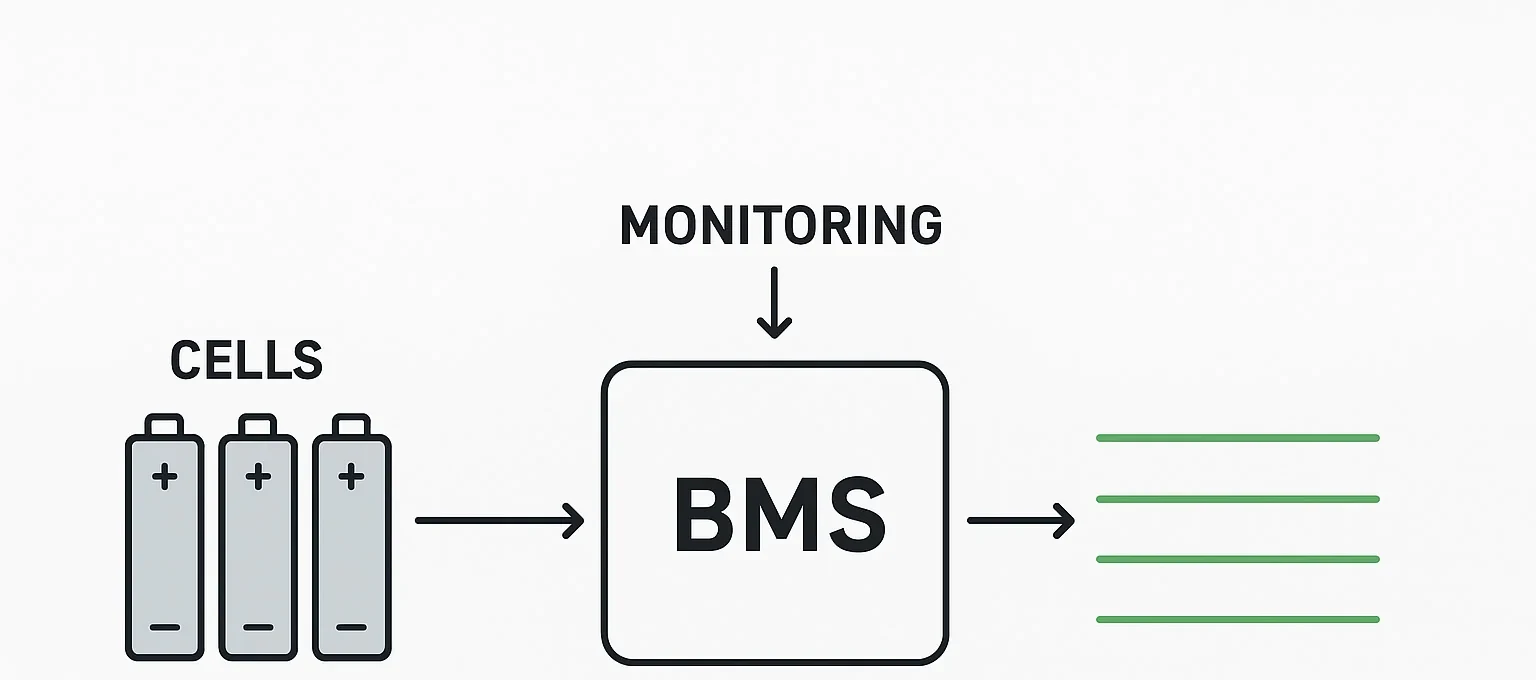
The battery management system inside each pack is a lifespan tool, not a standalone product. The company's BMS page lists the functions it performs across the range: cell balancing, cut-offs and charge shaping. Balancing keeps cells at similar states of charge so the pack does not drift out of step over time. Cut-offs stop charge and discharge at the limits the pack is designed for, so a single bad event does not become a permanent loss.
Charge shaping controls how current is applied through the charge, which matters for how much stress each cycle puts on the cells. The supplier describes these as range-level functions; the exact behaviour depends on the model. Ask for the BMS description for the exact model you are specifying, and read it alongside the cycle-test report so you understand what the pack is doing to protect itself in your application.
The product page states which functions apply to each model. Do not assume that a function listed for the range is active in every pack.
The documents to request
Only some models publish a cycle figure at all. Where one is published, it sits on that model's page with its caveat: a cycle claim without its test conditions is not a specification you can cost a fleet or a project against. Before you commit, ask for the cycle-test report behind the figure for the exact model. The report should show the depth of discharge, the charge and discharge rates and the temperature used in the test. For a model with no published figure, ask what cycle-test data exists before you rely on a lifespan estimate.
Ask for the test reports and certificate documents your market requires for the exact model before you order. The supplier describes the range; the documents describe the unit. Those are different things, and the difference matters when you are writing a specification, sizing a fleet or answering a question from an installer or distributor.
The range is described at range level and the figure at model level; the test report is what you use to check the claim.
Before you order
How long will a LiFePO4 pack last in my fleet?
The honest answer is that it depends on how the pack is used, not only on the headline cycle claim. Depth of discharge, charge and discharge rates, and temperature all affect how a pack ages. Only some models publish a cycle figure at all; where one is published, it sits on that model's page with its caveat. Ask for the cycle-test report behind that figure for the exact model before you cost a fleet.
Where do I find the cycle figure for a model?
On the model's own page, where the model publishes one — most models publish no cycle figure. A cycle number without its test conditions is not a specification you can use. Ask for the cycle-test report for the exact model you are considering.
What should I ask for before ordering this range?
Ask for the test reports and certificate documents your market requires for the exact model before you order. Also ask for the cycle-test report behind the cycle figure, and for the BMS description for the model, so you can see which functions apply. The supplier describes the range; the documents describe the unit.
Does calendar ageing matter as much as cycle ageing?
They are different things. Cycle ageing comes from charge and discharge work; calendar ageing happens over time regardless of use. Both affect how a pack performs in service. The cycle figure on a model page addresses cycle ageing under the test conditions used. Ask for the cycle-test report and any calendar-ageing information the supplier holds for the exact model before you specify it.
Ask for the test report behind a model
Send the inquiry form with your application and the exact model you are considering, and ask for the cycle-test report behind that model's figure before you cost a fleet or a project.
Go to the inquiry form