Blog
Lithium batteries for forklifts: where the return comes from
CELLFORGE BLOG — FORKLIFTS · THE RETURN, ITEMISED WITHOUT SLOGANS
Fleet managers do not buy chemistry; they buy hours of work per truck. This article itemises where a lithium traction pack changes a forklift fleet's cost structure — qualitatively, because honest figures belong to each fleet's own duty data.
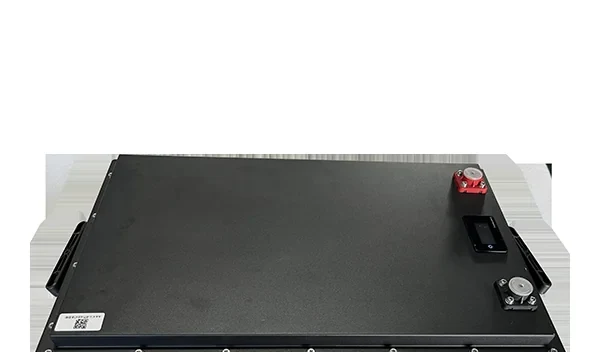
The swapping economy of multi-shift fleets
In a multi-shift operation, lead-acid traction power is not one battery per truck. It is a spare battery on the rack, a charger bay, a battery room and the labour to move packs in and out across the shift change. Most fleets maintain that spare fleet without ever costing it as a line item. Whether a lithium pack can be charged on the truck depends on the model and its charging setup; check the charging currents and charger compatibility for the exact model before planning around it.
Think about what the swap economy actually consumes. There is the swap itself: a trained operator leaving the truck, moving a heavy pack, and returning the truck to work. There is the spare pack sitting on a rack, which is capital tied up in inventory rather than in the truck. There is the battery room: space, ventilation, handling equipment and the inspection routine around it. There is also the work the battery room creates for supervisors and maintenance staff. None of these lines show up on a battery quotation, but they all sit in the fleet cost file.
With packs that charge on the truck, the question changes from “how fast can we swap” to “where and when can this truck charge.” The company profile describes R&D, production and sales of lithium-ion battery packs and energy-storage systems. Whether that removes a given fleet's spare-battery inventory depends on duty cycle, charger placement and shift patterns — all of which the buyer should map before the business case is written.
Do not take a supplier's word for what your swap economy costs. Count the swaps, the spare packs, the battery-room hours and the charger bays your operation actually runs, and build the comparison from those numbers. Then ask for the specifications for the exact model you are costing, so the comparison is between real configurations rather than generic claims.
Maintenance hours that disappear
Lead-acid traction batteries come with a maintenance routine that most fleets treat as background cost. Watering is the obvious one: cells need topping up on a schedule, and that schedule runs whether the fleet is busy or not. Equalisation charging is another recurring line — a deliberate extended charge that has to be planned around truck availability. Terminal care, cleaning and inspection all add labour hours that are rarely counted against the battery itself.
A sealed, managed LiFePO4 pack removes much of that routine. The company profile describes R&D, production and sales of lithium-ion battery packs and energy-storage systems, and its packs include a battery management system as a built-in feature. That management does not eliminate maintenance; it shifts it. The routine watering and equalisation tasks go away, while inspection, connection checks and fault response remain part of any responsible fleet programme.
This matters for the business case because maintenance labour is often invisible in fleet cost reporting. It is spread across technicians, supervisors and shift leads, and it rarely appears as a battery line item. Ask your maintenance team to log the hours they currently spend on watering, equalisation and terminal care for the packs you run. That log becomes one of the honest inputs to a comparison.
Do not accept a savings claim from any supplier without that log in hand. Build the maintenance line from your own records. Then ask for the product documentation and the test reports your market requires for the exact model before you order, so your team understands what routine remains and what is removed.
Opportunity charging rewrites the schedule
The operating pattern that changes most with a lithium traction pack is charging during breaks. Instead of a dedicated charge cycle at the end of a shift, the truck takes energy when the operator stops — lunch, a break, a changeover. That sounds simple, but it puts new demands on how the site is laid out and how the fleet is configured. The supplier describes charging strategies as a traction configuration item, which means the answer is model-specific, not a general rule.
Charger placement becomes a planning decision rather than an afterthought. If trucks charge during breaks, the chargers need to be where the trucks already are, not in a distant battery room. That can change the number of chargers a site needs, where they sit, and how cable routing and floor space are organised. Lead-acid packs are not generally suited to this pattern, so a fleet moving from lead-acid to LiFePO4 should expect the charging layout to be revisited, not simply reused.
Pack configuration matters too. The supplier describes charging strategies as a traction configuration item, and the company profile describes R&D, production and sales of lithium-ion battery packs and energy-storage systems. What that means for a buyer is that the pack, the charger and the duty cycle have to be matched. Ask for the charging specifications for the exact model you are considering, and check them against the way your shifts actually run.
The business case should capture the schedule change honestly. If opportunity charging reduces the number of chargers or the spare-battery count, that belongs in the comparison. If it requires new charger placement or different cabling, that belongs there too. Build the schedule from your own shift data first, then ask the supplier for the configuration details for the model you are costing.
Downtime is the line managers actually watch
Fleet managers may debate chemistry, but line managers watch availability. A truck that is down for a battery change, a charge cycle or a maintenance task is a truck not moving goods, and that is the number the operation feels. Battery behaviour shows up in availability in several ways: how long a pack takes to return to service, how predictable that time is, and how often the pack is the reason a truck is out of rotation.
Lead-acid duty patterns tend to produce downtime in blocks — a swap at shift change, a charge cycle that takes a truck out of the pool, a watering or equalisation task that has to be scheduled. A managed LiFePO4 pack, charged on the truck, changes the shape of that downtime rather than eliminating it. The supplier describes its packs as including a battery management system as a built-in feature, and buyers should ask what that system does in the exact model they are costing, including how it reports faults and how it behaves at the end of a shift.
The important point for the business case is that downtime is measurable from your own logs. Every fleet records when a truck was unavailable and often why. Pull those records for the last several months and separate battery-related downtime from other causes. That gives you a baseline the operation already trusts, which is far more persuasive than any brochure claim.
Then ask the supplier for the documentation that supports the comparison: the specifications for the exact model, the charging strategy for your duty cycle, and the test reports and certificate documents your market requires before you order. The supplier describes its range as built for industrial traction and storage duty, but the availability case has to be made from your logs, not from a sales sheet.
Building the case from your own data
The method for this business case is straightforward, and it does not start with a supplier. It starts with your fleet's own records. First, list the shifts each truck runs and the duty cycle within each shift — how long it works, how often it stops, and what it moves. Second, count the swaps: how many battery changes happen per truck per week, who performs them, and how long they take. Third, pull the maintenance logs for watering, equalisation and terminal care, and total the labour hours.
Fourth, inventory the chargers: how many you have, where they sit, and how they are used across the day. Fifth, separate battery-related downtime from other downtime in your availability records. Together those five inputs describe the cost structure you are trying to change, and they are the numbers any honest comparison should rest on. Build each of those lines from your fleet’s own records.
With that baseline in hand, ask for a model-specific quotation against your duty data. The supplier describes charging strategies as a traction configuration item, so the quotation should reflect your shifts and your charger layout, not a generic package. Point your procurement team to the traction range and ask which configuration fits the duty cycle you have documented.
Before you commit, ask for the cycle-test report for the exact model you are costing, with the test conditions stated, and ask for the test reports and certificate documents your market requires for that model. Build the case from what the supplier states for the model you cost, and cite that source in your business case. Build the case from your data, then hold the supplier to model-specific evidence.
Talk to the sales team
Send us the inquiry form with your application, shift pattern and the model details you are considering, and we will route it to the right configuration information for your fleet.
Go to the inquiry form